

Millions face the same fundamental question every Monday morning: How does it feel to go to work today? For many, the answer is characterised by resignation rather than enthusiasm. But what does this actually mean for both the individual and the organisation? After more than two decades in management and organisational development, I have realised that this everyday feeling of workplace satisfaction is one of the most underestimated factors for business success.
The brutal truth about employee engagement
Let’s start with facts. According to Gallup’s latest global report, employee engagement has dropped to just 21% globally in 2024* – meaning four out of five employees don’t feel genuinely engaged in their work. This represents not just a human tragedy, but also an economic catastrophe of enormous proportions.
Research from ResearchGate shows that companies with highly engaged employees see 21% higher profitability, 17% increased productivity, and a 59% reduction in voluntary turnover*. These numbers aren’t just statistics—they represent the difference between thriving companies and those struggling for survival.
But here comes the provocative truth: It fundamentally comes down to leadership.
The underestimated impact of leadership
As a business leader and consultant, I’ve seen the pattern repeatedly repeat. Organisations invest millions in technology, processes, and marketing, but overlook the most critical factor for success – the quality of their leadership. This isn’t just my opinion; it’s supported by extensive research.
The International Coach Federation reports that companies investing in leadership development experience a 32% reduction in turnover and a 10% increase in productivity*. This correlation isn’t a coincidence—it reflects a fundamental reality about how people function in organisations.
The hidden costs of poor leadership
Let’s talk about the real costs. When employees don’t enjoy going to work, it creates a chain reaction of negative effects:
Direct costs:
- Recruitment costs that can amount to 50-200% of an annual salary for qualified positions
- Training costs for new employees
- Administrative costs for HR processes
The “grey zone” costs:
- Onboarding time that can extend over months
- Decreased productivity during the learning period
- Lost institutional knowledge when experienced employees leave
- Impact on team morale and other employees’ motivation
SHRM research shows that 3% of annual turnover consists of high-performing employees who leave for reasons that could have been prevented through better leadership*. This means organisations are actively losing their most valuable assets due to avoidable leadership shortcomings.
The science behind workplace satisfaction
Research in organisational psychology shows that workplace satisfaction isn’t just about “feeling good” – it directly affects performance. When employees experience:
- Autonomy: The feeling of control over their work
- Meaningfulness: Understanding of their contribution to larger goals
- Development opportunities: Continuous growth and learning
- Recognition: Appreciation for efforts and results
- Psychological safety: The ability to take risks and make mistakes
…something remarkable happens. Productivity doesn’t just increase marginally – it can double or triple compared to disengaged employees.
Transformational leadership as the solution
Having studied hundreds of organisations and led change processes at a global level, I’ve identified five critical areas where leadership makes the difference:
1. Authentic communication
Transformational leaders don’t just communicate directives—they share visions, explain the “why” behind decisions, and create meaningful dialogues. Research from Frontiers in Psychology shows that transformational leadership directly affects job satisfaction and performance through improved employee engagement*.
2. Individual consideration
Every employee is unique, with different motivational factors, strengths, and development areas. Successful leaders adapt their leadership to individual employees rather than using a one-size-fits-all approach.
3. Intellectual stimulation
Encouraging innovation, creativity, and critical thinking creates better solutions and gives employees a sense of ownership and engagement in outcomes.
4. Inspirational motivation
Effective leaders help employees see connections between their daily work and the organisation’s greater purpose. This creates internal motivation that is much stronger than external pressure.
5. Idealised influence
Leading by example and acting according to organisational values builds trust and respect – cornerstones of long-term success.
The practical path forward
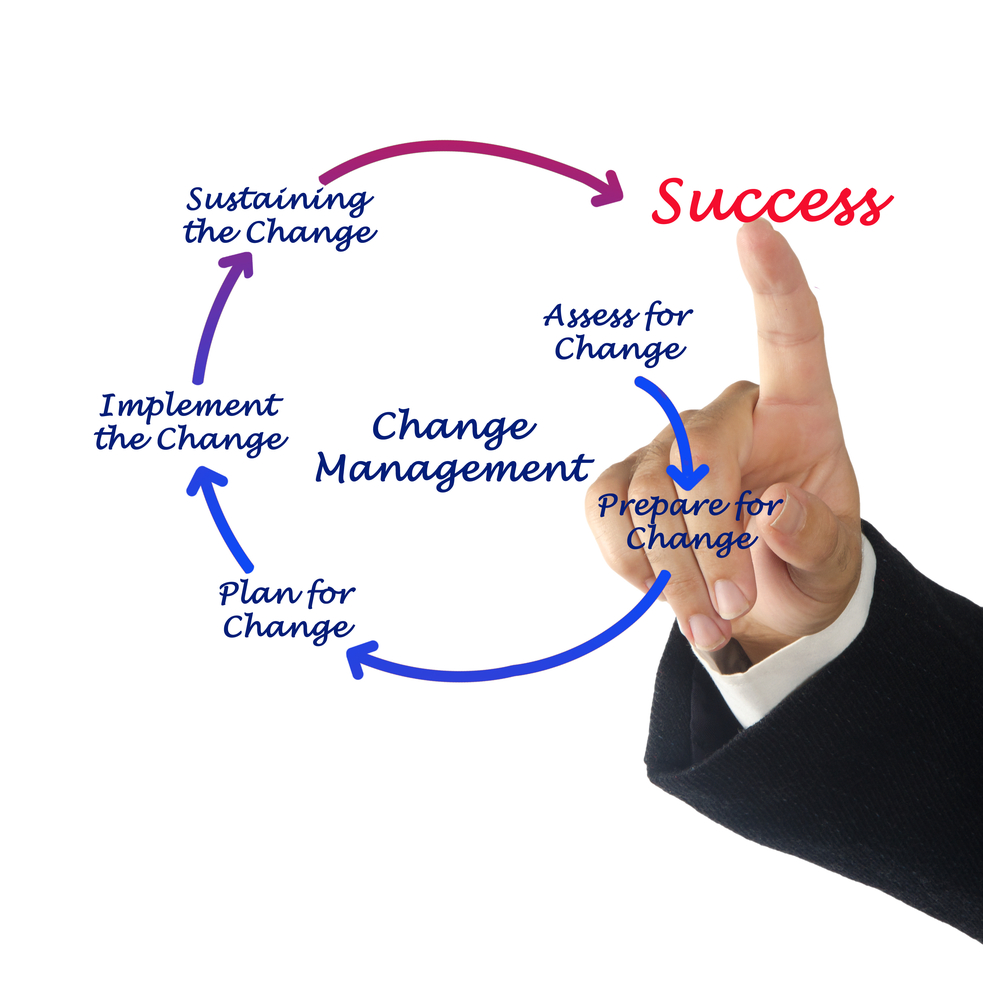
Based on my experience from Capacia Group and work with organisations across different industries, I propose a systematic approach to improving workplace satisfaction through enhanced leadership:
Phase 1: Diagnosis (Months 1-2)
- Conduct in-depth employee surveys that go beyond traditional “satisfaction measurements”.
- Analyse turnover data and identify patterns.
- Map existing leadership capabilities and development areas.
Phase 2: Leadership development (Months 3-8)
- Implement structured leadership development programs focused on transformational leadership principles.
- Establish mentorship programs between experienced and new leaders.
- Create regular feedback loops between leaders and employees.
Phase 3: Cultural change (Months 6-18)
- Develop and communicate clear organisational values.
- Implement recognition and reward systems that support desired behaviours.
- Create processes for continuous improvement and innovation.
Phase 4: Sustainability (Ongoing)
- Establish measurement systems to monitor engagement and satisfaction continuously.
- Integrate leadership development into the organisation’s long-term strategic planning.
- Create succession planning that ensures continuity in leadership quality.
ROI of investing in workplace satisfaction
Let me be crystal clear about the economic calculation. A medium-sized organisation with 500 employees that succeeds in increasing its employee engagement from industry average (21%) to an excellent level (over 70%) can expect:
- Productivity increase: 17% = approximately $2-3 million annually in increased output
- Reduced recruitment costs: 59% reduction in voluntary turnover = $1-1.5 million in annual savings
- Increased profitability: 21% improvement through a combination of higher productivity and lower costs
These figures are based on established research and my observations from successful change processes.
Innovation as a natural consequence
An often overlooked aspect of workplace satisfaction is its connection to innovation. When employees feel psychologically safe, valued, and engaged, they dare to:
- Suggest new ideas without fear of negative consequences
- Experiment with improvements in their work processes
- Challenge existing assumptions and search for better solutions
- Share knowledge and collaborate more effectively
Companies like 3M, Google, and Apple have all built their innovation cultures on the principle that employees who enjoy their jobs naturally become more creative and willing to take positive risks.
Leadership in the digital era
The need for engaged employees is even more critical in today’s rapidly changing business landscape. Remote work, hybrid models, and technological transformation require leaders who can:
- Build trust at a distance
- Maintain team cohesion without physical proximity
- Navigate complexity and uncertainty with confidence
- Quickly adapt to new tools and processes
Research shows that organisations with strong leadership capabilities are better equipped to handle these challenges and emerge stronger from change processes.
The human factor
Behind all statistics and business calculations lies a simple human truth: We spend one-third of our adult lives at work. This isn’t just work time – it’s life. When millions of people wake up every Monday with dread rather than enthusiasm, it represents lost productivity and human potential.
As leaders, our responsibility extends beyond quarterly results and annual reports. We have the responsibility to create environments where people can flourish, grow, and contribute meaningfully.
Concrete next steps
For organisations wanting to begin this journey, I suggest the following immediate actions:
- Measure current state: Conduct an honest assessment of employee engagement and leadership quality.
- Identify champions: Find leaders who already exemplify the behaviours you want to see more of.
- Start small-scale: Pilot change initiatives in one or a few departments before scaling.
- Invest in development: Allocate real resources for leadership development, not just symbolic amounts.
- Measure and adapt: Establish regular measurements and be ready to adjust the approach based on results..
Final reflection
The question “Why is it important to enjoy going to work?” doesn’t have just one answer – it has thousands of answers, one for each employee in the organisation. However, common to all these answers is that they are fundamentally concerned with leadership.
In a world where technology can automate more and more tasks, the human factor—creativity, innovation, engagement, problem-solving—becomes our primary competitive advantage. This factor only thrives in environments where people flourish.
As a leader and advisor within Capacia Group, I see this as our era’s greatest leadership challenge and incredible opportunity. Organisations that understand and act on this insight will dominate their markets. Those that don’t will become historical footnotes.
The choice is ours. Every day.
Sources and footnotes:
- Gallup State of the Global Workplace Report 2024 – Global employee engagement dropped to 21%
- ResearchGate: “Enhancing Employee Satisfaction and Engagement to Boost Productivity” (2024) – 21% higher profitability, 17% increased productivity, 59% reduction in voluntary turnover for companies with highly engaged employees
- International Coach Federation: Companies with leadership development experience, 32% reduction in turnover and 10% productivity increase
- SHRM Research: 3% of annual turnover consists of high-performing employees who leave for preventable reasons
- Frontiers in Psychology (2022): Transformational leadership directly affects job satisfaction and performance through improved employee engagement
Mats Kallmyr is the founder and CEO of Capacia Group, a consulting firm specialising in management consulting and change management. With over 20 years of experience in leading positions in international companies such as Ericsson, Saab, and ST-Ericsson, he helps organisations build stronger leadership cultures and achieve sustainable growth.






Leave A Comment